ELDER ELIJAH HANKS REJECTED BY CALVINISTS
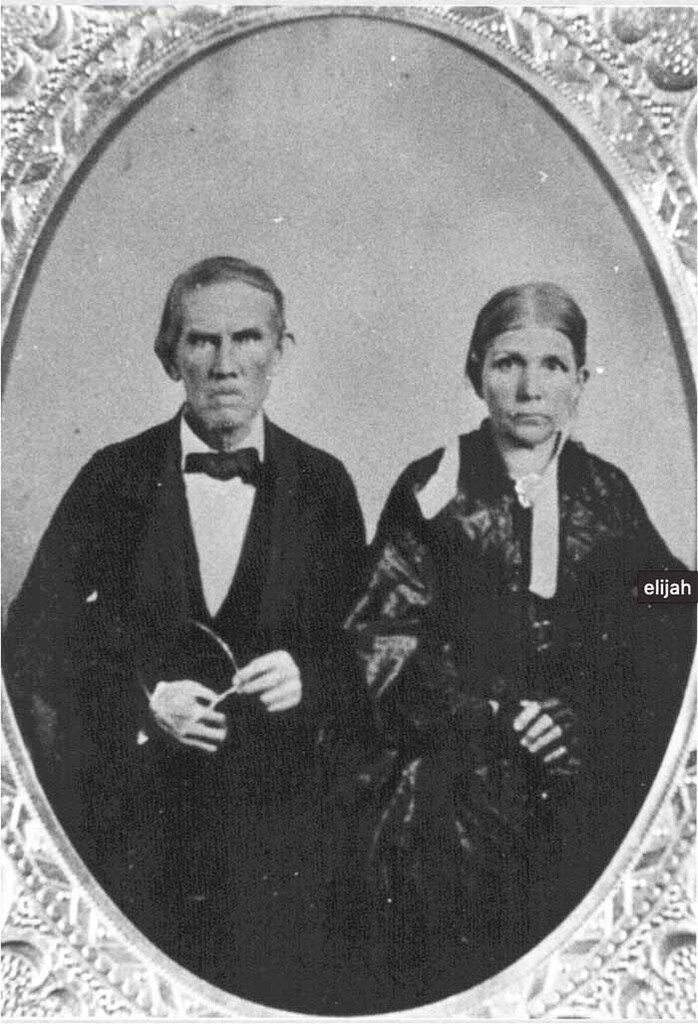
Elder Elijah Hanks, born in Virginia in 1793, grew up in a devout Baptist family. In 1820 they came to Tennessee and Hanks gre up attending church but did not give much thought to religious things. Married at age 19, Hanks was as any other frontiersman, clearing the forest and making a home. At some point, he made a profession of faith and was baptized by Elder Dodson, his pastor. Feeling a call to preach, Elder Hanks said the following;
" My impressions, at times, were very strong to call on sinners to come to the Savior; but, when I thought of my inability for this important work, I would shrink from the cross. Being almost entirely without an education, I thought if I attempted such a thing, I would only disgrace the cause and myself. Finally, I was brought low on the bed of affliction. I felt guilty before God, for not doing what I sometimes thought was my duty, and I promised God that if he would restore me to health again I would do the best I could. I had a very long spell of fever, but finally, through the mercy of God, I was restored to health. Then my promise to God was arrayed before me, and I prayed to God, time and again, to make known to me, plainly, my duty, and I promised to perform it the best I could. I recollect one day, while I was on my knees at prayer, the curse inflicted on Jonah, for disobedience, passed before my mind, and I believed if I failed to yield to impressions, which I often had, that the frowns of God would rest upon me. The Pastor of our church, Elder Dodson, lived some distance away, and he was only with us once a month; and my brother-in-law had similar feelings to my own, he and I held prayer meetings, which greatly assisted me, our church cooperating with us. We held meetings .at night, from house to house, two or three nights in the week, and would give exhortations. The Lord greatly revived his work. In a few weeks there were about sixty added to the church. Sometimes, while telling what the Lord had done for poor sinners, it seemed the greatest privilege that I ever enjoyed; at other times I thought that I had disgraced myself and the cause of Christ, and that I had better quit; and if it had not been for the kind treatment and encouragement given me by the church, I should have faltered by the way. In a short time the Church licensed me to preach, and in a few months I was set apart to the full work of the ministry, by a Presbytery consisting of Elders Hobbs and Dodson."
After ordination, Hanks was called as pastor of Knob Creek Church. The elders who ordained him, along with Hanks were the only elders in the Cumberland Association who were not Calvinists. How did this come about? At first it would seem the association tolerated such views, but as we go further this was not the case. Yet, it also seems clear that Hanks, with Dodson as his pastor, had grown up with these doctrines, and no controversy arose. Whatever the case, Elder Hanks said at first the Calvinist elders were kind, and told him to keep meditating on the calvinistic doctrines, and he would come to see their truth.
Hanks said “Some were teaching that a covenant was made, before the foundation of the world, between the Father and the Son, and that the Church was given to the Son by the Father; that the Son agreed, on his part, to come into this world, to suffer and die for those whom the Father had given him in that covenant, and that all for whom he died would be saved. Sometimes they would preach that the Church was eternally justified in the mind and wisdom of God–that there was a common and a special call to sinners; the special call could not be resisted; the Spirit quickening the elect alone. In refering to this subject, he says: I did my best to believe this doctrine, as taught by my brethern, for I fully believed them to be honest. I loved them, and it grieved me to the heart that I could not see and believe as they did; for I could be nothing but a Baptist. I read and investigated their proof-texts prayerfully, willing to follow the teachings of God’s word in all things. I felt that I was responsible to God for everything that I taught in His name, and if called to the ministry, it was my duty to preach the whole truth, as I understood it. I believed in the doctrine of election and predestination, as taught in God’s word, but not as understood and preached by my brethern. Indeed, it was a matter of rejoicing to my poor heart that God did predestinate us to the adoption of children by His Son Jesus Christ, who is mighty and able to save, to the uttermost, all that come unto him; seeing He ever liveth to make intercession for the transgressors. I believed that we are the children of God by faith in Jesus Christ, having been elected according to the foreknowledge of God through sanctification of the Spirit and belief of the truth. In this way I believed and taught the doctrine of election. For I believed that All the happiness that accrues to the children of God, is by faith in Jesus Christ, and not for works. I also believed and taught that Jesus Christ, by the grace of God, had tasted death for every man. This doctrine I proclaimed wherever I went. My very soul burned within me, for I wanted to preach it all over the land, from the rivers to the ends of the earth. I could not find anything in all God’s word that did not harmonize with my cherished views. This made me feel strong in the faith and power of His might. My brethern, however, began to cry out, ‘he is an Arminian! — have nothing to do with him!’ Still I could not hold ‘my peace, but cried the more, in the language of the “Master,’ to all men, ‘Repent, and believe the Gospel. Except ye repent, ye shall all perish; for God commandeth all men, everywhere, to repent. He that believeth not shall be damned. Ye will not come unto me that might have life.’ And with many such Scripture quotations I appealed to the sinners. God blessed my own soul as I preached his precious truth, and also made it the power of God unto salvation to many precious souls.”
Elder Hanks gift of boldness and clarity, had been embraced by most of the members of Knob Hill Church before he was even its pastor. However, I suppose Hanks was a little too bold, for in 1829 a committee from the Cumberland Association was sent to reel Hanks in. Hanks responded "I hoped to be able to satisfy them that we were orthodox. It was all in vain; for, although shown from the history of the Baptists, that, years ago, our brethern in Virginia and Kentucky had agreed that the preaching, by a brother that Jesus Christ, by the grace of God had tasted death for every man; or by the preaching by another brother, that he only died for the elect, and that the elect alone have a right to the privileges of the Gospel; should be no bar to church fellowship and communion; and that each party did agree, and had dropped the names by which each had been heretofore distinguished, styling themselves the “United Baptists.” I also showed that I was not the agressor; for the same doctrine preached by me, was preached by our brethern in other States. After all this, the committee decided that we had departed from the faith, and we were consequently cut off from union with our people. “This was a sore trial to me and the little band, who, like true and trusty friends, as they were, stood by and supported me in the darkest time of my ministerial life. “The church doors, as well as private dwellings were closed against me, and for many months I was denounced as a heretic by those whom I had taught in my early days to love Jesus. The churches were warned to have no fellowship with me. In this lonely condition, I shall never be able to describe my feelings. With not a Baptist Minister near enough to me with whom I could associate, I was shunned and avoided by them all, as if to touch me would contaminate or sully their purity; and except the Knob Creek and the Friendship churches, which had been likewise cut off from the Cumberland Association because they adhered to the views entertained by me, there was not a church in all this part of the State which had any sympathy for me, or those holding similar sentiments.”
The three associations which surrounded the Cumberland Association, would have fellowshipped Elder Hanks, two being Non Calvinist and one being tolerant of various views, but this would have required a days journey and the loss of fellowship and his leadership to Knob Creek and Friendship churches.
Later, Hanks began to baptize Methodists and Presbyterians who desired immersion upon their profession of faith. He even allowed some who were sprinkled to be be "members" of his churches, until they had strength enough to form churches of their own denominations. He also allowed open communion. This caused even greater persecution from his former Calvinist associates. How ironic. Today it is the Calvinists who say they are Baptists, who take in members who were sprinkled without requiring immersion, going even further than Elder Hanks, by calling these unimmersed members "Baptists". Elder Hanks later saw the folly of these practices and stopped them altogether.
When the mission controversy appeared, many of Hanks' former Calvinist adversaries saw the light when many of their stripe rejected missions and claimed God needed no help if he wished to save a man. This caused many of them to embrace Elder Hanks' views of which he said, "Hence each party separated from the other and began to work in their own way.’ I, of course, was found on the mission side of this question, and how my feelings were changed from a state of loneliness to that of joy and pleasure, for many of those who heretofore had held me off at a distance had their eyes opened now, and mutual friendship and good feeling were restored. How thankful I was, no tongue can tell, to meet not only in friendship, but in fellowship, those that I had so dearly loved. I now felt that whilst I was proclaiming a full and free salvation* to all men, I had the prayers and sympathy of many warm and loving hearts, who were once estranged from me in feeling. . When the final separation took place in the Knob Creek church we were stronger in numbers than it was at first believed, our number being near one hundred, including all the officers of the church. “About this time the Friendship church was also cut off by the same Association because it endorsed the doctrine that I believed and taught, by retaining me as a pastor. In a short time I baptized about forty-five hopeful converts. While our anti-mission brethern were crying ‘Heretic!"
* "free salvation was the term used for general atonement advocates, while "free grace" was used by Calvinists for Calvinism. Once again, this shows that Calvinists are the ones who 'had their eyes opened" and changed, not the Non Calvinists.
In this biography of Elder Hanks we see many things.
1) As shown in other articles, it seems it was always the Calvinists who broke the terms of union of the United Baptists, terms which they wrote.
2) Elder Hanks was neither Calvinist nor Arminian and in his own words he could be "nothing but a Baptist".How true this sentiment would soon become.
3) Hanks made clear that his doctrine was being preached openly in other states, yet the Calvinists called him "heretic", again breaking their own rules from when the United Baptist movement formed.
4) It seems obvious that many Calvinists re-examined their doctrines during the mission controversy and "saw the light" becoming Provisionists. Is that not what a Baptist does? Is that not the reason all articles of faith begin with "We believe the scriptures to be tho ONLY infallible rule of faith and practice"? Was it an accident that the Knob Creek Church was stronger and more blessed after the controversy?
You can read more about Elder Hanks here and here from which I gathered most of the above article.
Comments
Post a Comment